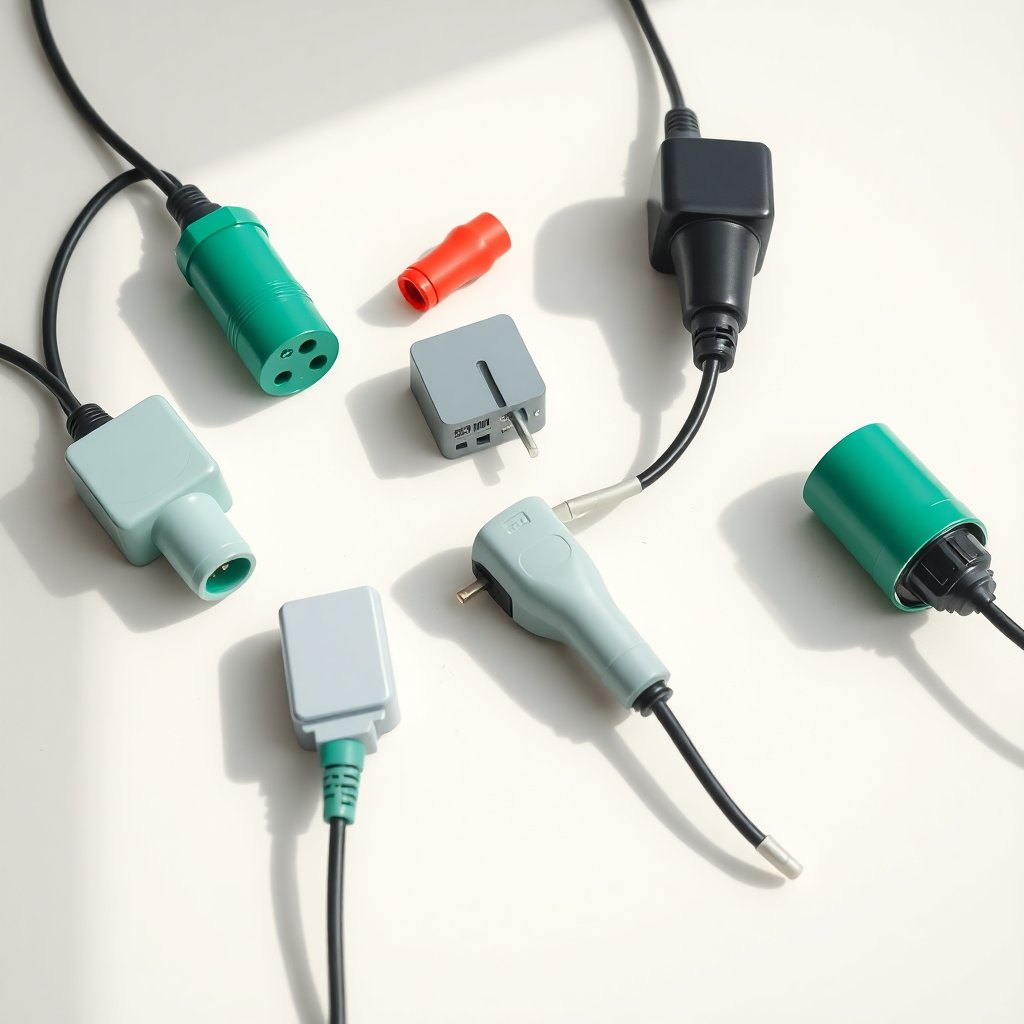
Charging a Tesla used to be refreshingly simple: pull into a Supercharger, plug in, walk away. Then the rest of the industry started switching to Tesla's connector, a flood of third-party adapters hit Amazon, and the terminology turned into alphabet soup. J1772, CCS1, NACS, J3400, Magic Dock. Most of it only matters in a handful of specific situations, but when one of those situations shows up in a parking garage at 11 percent battery, knowing which adapter lives in your frunk is the whole game.
This guide sorts out what each adapter actually does, which ones a Tesla owner needs versus the ones that are for other cars, and how to tell a safe adapter from a cheap one that melts. The goal is a small, correct kit instead of a drawer full of connectors you will never use.
As an Amazon Associate we earn from qualifying purchases. Adapter compatibility depends on your exact model, model year, and current software version, so always confirm fitment against your own car and the live product listing before buying.
The Four Words You Actually Need
Before shopping for anything, it helps to separate the connector standards from the marketing. There are really only a few that affect a Tesla owner day to day.
NACS (North American Charging Standard) is the connector on your Tesla. It is the slim plug you have used since delivery day. In 2023 Tesla opened the design and it was standardized by SAE as J3400 — same physical connector, formal engineering name. When you read "NACS" and "J3400," treat them as the same thing.
J1772 is the older North American plug for Level 1 and Level 2 AC charging. Almost every non-Tesla public Level 2 station, most workplace chargers, and many hotel and apartment chargers use it. Your Tesla cannot plug into a J1772 handle directly, which is exactly what the J1772 adapter solves.
CCS1 (Combined Charging System, type 1) is the older North American plug for DC fast charging — the big stations from networks like Electrify America and EVgo that were not Tesla. A CCS1 adapter lets a Tesla pull DC fast power from those stations.
Magic Dock is not an adapter you buy at all. It is a built-in CCS1 adapter that Tesla bolted onto certain Supercharger stalls so non-Tesla cars could use them. It matters only because it sometimes confuses the shopping question — if a site has Magic Dock, a CCS1-port car does not need its own adapter there.
The US Department of Energy keeps a clear, vendor-neutral overview of these connector types and charging levels at the Alternative Fuels Data Center, which is worth a bookmark if you want the official reference rather than a forum argument.
The One Adapter Nearly Every Tesla Owner Should Carry: J1772
If you buy a single adapter, make it the J1772. Level 2 AC charging is the backbone of destination charging — hotels, parking structures, shopping centers, workplaces, and the growing number of chargers that are not on the Tesla network. A huge share of those use a J1772 handle, and without the adapter you simply cannot connect.
Newer Teslas have shipped with a J1772 adapter in the box, but they get lost, borrowed, left plugged in at a hotel, or never came with used cars. A spare is cheap insurance. The good ones are compact enough to live in a door pocket or the frunk, have a solid locking collar so the handle does not pop out mid-charge, and carry the full 48 to 80 amp AC rating rather than a throttled budget spec.
→ Shop J1772 to Tesla adapters on Amazon
What to check before buying: confirm the amperage rating matches or exceeds your Level 2 charging rate, look for a release button or locking mechanism, and read recent reviews specifically for heat complaints. A J1772 adapter does AC pass-through at modest power, so a quality unit should never get more than warm. If reviews mention melting or scorching, skip it no matter how low the price.
For the broader kit that goes around this adapter — cable organizers, travel pouches, and the home-charging gear that makes daily plugging painless — our roundup of the best Tesla charging accessories covers the pieces worth owning.
The DC Fast-Charge Question: CCS1
The CCS1 adapter is a different animal because it handles high-power DC charging, and the picture has shifted a lot. For years, the CCS Combo 1 adapter was the way a Tesla used non-Tesla fast chargers. It is still useful if your regular routes include CCS1 stations and your Supercharger coverage is thin.
Two caveats matter here. First, not every Tesla supports the CCS1 adapter out of the box. Some older vehicles needed a retrofit to enable it, so compatibility is tied to your specific car and its build — verify against Tesla's own compatibility information for your VIN before spending money. Second, DC adapters carry serious current, which raises the stakes on quality enormously. This is the one adapter where buying the official or a reputable name-brand unit is strongly worth it over a no-name import.
→ Shop Tesla CCS Combo 1 adapters on Amazon
Honest take: many Tesla owners never need a CCS1 adapter because Supercharger coverage along their routes is already dense. Before buying, map your actual long trips. If every stop you would realistically make has a Supercharger, the CCS1 adapter is a drawer ornament. If you road-trip through regions where the nearest fast charging is an Electrify America site, it earns its place. If you are still figuring out your road-trip charging strategy, our guide to the best portable EV chargers pairs well with the fast-charge planning here.
Home Charging Adapters Are a Separate Category
Here is where shopping gets muddled. The word "adapter" also covers the plug adapters for the Tesla Mobile Connector, and those are a completely different thing from the J1772 and CCS1 connector adapters above.
The Mobile Connector is the portable cable that plugs into a wall outlet. It accepts swappable plug ends so it can draw from different outlets:
- NEMA 5-15 — a standard household outlet, roughly 3 to 4 miles of range per hour. Fine for a slow overnight top-up, useless for a daily driver with a long commute.
- NEMA 14-50 — a 240-volt outlet like a dryer or welder plug, up to around 30 miles of range per hour. This is the sweet spot for most home setups without a hardwired wall connector.
- NEMA 6-20, 14-30, and others — for specific outlets you might already have in a garage or workshop.
A small set of these plug adapters turns the Mobile Connector into a go-anywhere home and travel charger, letting you borrow a relative's dryer outlet or a campground hookup.
→ Shop Tesla Mobile Connector adapter sets on Amazon
Safety first, and this is not negotiable: a 240-volt outlet must be installed and inspected by a licensed electrician on a correctly sized circuit. A NEMA 14-50 adapter does nothing good on an outlet wired to the wrong breaker, and overloaded household circuits are a genuine fire risk. This is general guidance, not an electrical inspection of your specific home — when in doubt, have an electrician verify the circuit. For the full walkthrough of doing this right, see our guide on how to set up home charging.
What the NACS Shift Actually Changes for You
The headline over the last couple of years has been the industry adopting NACS. Ford, GM, Rivian, and others moved to the Tesla-style connector, and the SAE standardized it as J3400. It is a real change, but most of its effects land on other automakers' cars, not on existing Teslas.
For a Tesla owner, the practical takeaways are short:
- Your connector did not change. Superchargers still work exactly as before. You do not need a new adapter because the standard got a formal name.
- Superchargers are getting busier. As non-Tesla EVs gain access, popular stalls can see more traffic. This is a planning consideration, not an equipment one — it makes a J1772 adapter for destination charging more valuable as a way to top up away from crowded fast chargers.
- Beware adapters built for the opposite direction. A growing number of listings are NACS-to-CCS1 adapters designed to let a CCS-port car (a non-Tesla) plug into a Supercharger. Those are not for your Tesla. Read the direction of any adapter carefully, because the search results now mix both audiences.
That last point is the single most common shopping mistake right now. An adapter's name tells you which plug goes on which end, and buying the reverse of what you need is an easy, expensive error.
Buy Small, Buy Safe: A Short Checklist
Adapters are low-glamour gear, so the smart money goes to safety and fit rather than brand flash. Run every candidate through the same filter.
- Direction and fit. Confirm which plug is on which end, and that it matches your car's model year and software. Reverse-direction adapters are everywhere now.
- Current rating. The adapter should meet or exceed your charging rate. A throttled AC adapter quietly slows every session.
- Locking and build. A positive locking collar or release button keeps the handle seated. Loose fits cause arcing and heat.
- Heat in the reviews. Search the reviews for "hot," "melt," and "scorch." On a quality adapter those words should be absent. DC adapters especially should come from a reputable maker.
- Keep the kit lean. A J1772 adapter for almost everyone, a Mobile Connector plug set for home and travel, and a CCS1 adapter only if your routes truly need it. A locking storage holder keeps them from rattling loose in the frunk.
→ Shop Tesla charging adapter holders and organizers on Amazon
The Bottom Line
Strip away the acronyms and the decision is simple. Carry a quality J1772 adapter so you can use the vast network of Level 2 AC stations that are not Tesla. Keep a small set of Mobile Connector plug adapters so your portable cable works at any outlet you encounter, installed safely by a professional. Add a CCS1 adapter only if your real-world driving sends you past non-Tesla fast chargers, and buy a reputable one when you do. The NACS transition is reshaping the industry, but for the car in your driveway today it mostly means a formal new name for the plug you already use and busier Superchargers to plan around. A lean, well-chosen adapter kit is one of the cheapest upgrades you can make, and the one most likely to save a trip.
As an Amazon Associate we earn from qualifying purchases. This article contains affiliate links; if you buy through them we may earn a small commission at no additional cost to you.